HBD HPEC!
It is wonderfully appropriate that the High Plains Environmental Center in Centerra would first open on the first day of spring. That was March 21, 2001. Back then, the underlying philosophy of the HPEC — that community-building and conservation should go hand-in-hand — was a revolutionary idea. (For that matter, maybe it still is.) So, how did it all begin? Well, we’ll let HPEC Executive Director Jim Tolstrup tell you the story.
Happy Birthday High Plains Environmental Center!
HPEC’s birthday is on March 21st, the Spring Equinox. Founded in 2001, our organization is now 24 years old! We wanted to take this opportunity to tell the story of how HPEC came about and a bit of what has been accomplished over the years.
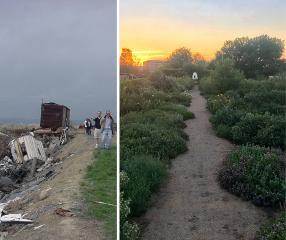
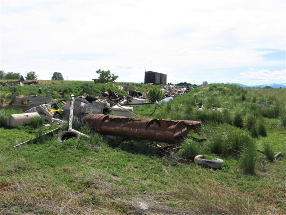
In the late 1990s, Chad and Troy McWhinney brought their plans for a 3,000-acre master-planned development, Centerra, to the City Planning Department in Loveland, Colorado. A portion of the land had belonged to the Realberry’s great-grandfather, John Hahn, who claimed the homestead in 1860. The remainder was purchased from various owners. The land was primarily actively farmed or abandoned farmland. A junkyard containing an entire railroad car sat on the westernmost portion of the land.
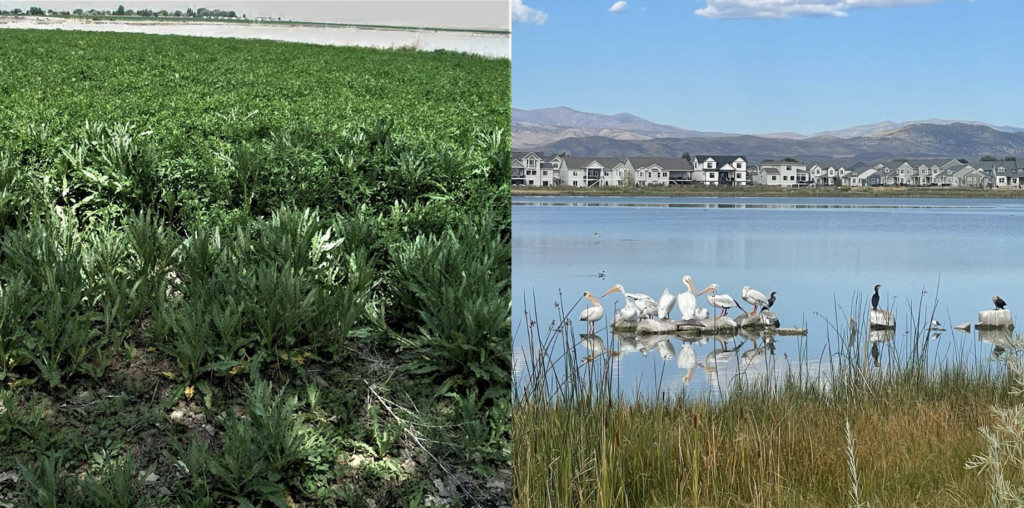
The City’s response to Realberry’s proposal included a stipulation that the land would be 20 percent open space at buildout. Realberry hired a group called Cedar Creek to conduct an environmental assessment to identify “environmentally sensitive areas.” The Cedar Creek study reflected the history of the land by evaluating its present state, which was basically an ocean of weeds with faint reminders of a former shortgrass prairie environment. The report evaluated areas surrounding two reservoirs (Houts Reservoir and Equalizer Lake) and suggested setbacks based on existing habitat value. The reservoirs, dug nearly 100 years earlier, had become particularly valuable habitat for migratory waterfowl.
Tom Hoyt, partnered with Realberry to build High Plains Village, the first residential neighborhood in Centerra. As a developer and lifelong conservationist, Tom said “You can’t talk about one without the other, they go hand in hand.” Tom suggested creating a 501(c)3 nonprofit to own the conservation land surrounding Houts and Equalizer.
The developers, McStain and Realberry, committed to donating seventy-six acres surrounding the reservoirs to be owned and managed by the Environmental Center. An agreement with the Greeley Loveland Irrigation Company (GLIC) secured a perpetual lease for the lake surface rights for the Environmental Center. The developers voluntarily imposed an environmental assessment fee to be collected by the city during the permitting process for all projects within Centerra, west of the interstate.
The collected environmental assessment fees have been invested at the Community Foundation of Northern Colorado to create an endowment which helps HPEC offset the cost of managing the 275-acre natural preserve, and 3.5 miles of trails.
In 2017, we built our visitor center where demonstration gardens, open space and trails can be accessed by the public.
by Jim Tolstrup
Executive Director, HPEC